
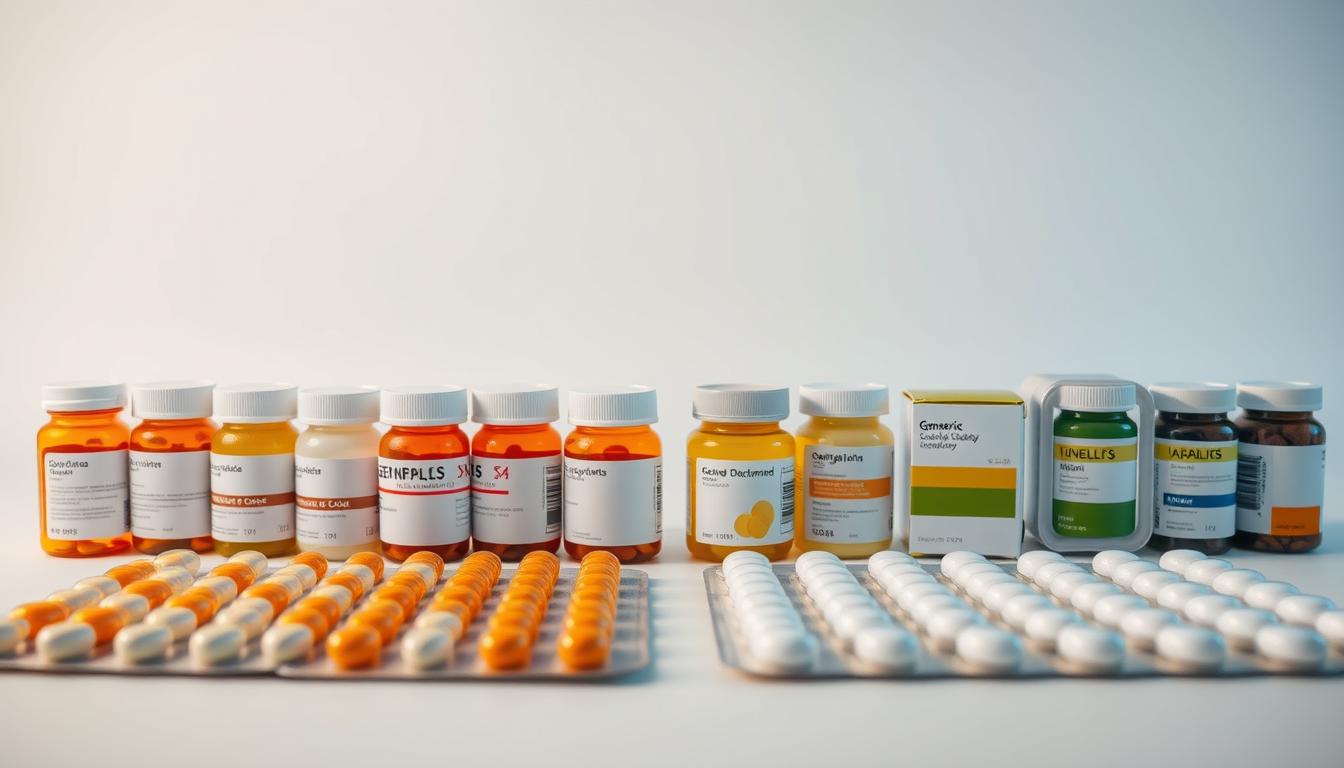
Are lower-cost medications as effective as their more expensive counterparts? This question is at the heart of the debate surrounding generic vs branded medicines. With healthcare costs on the rise, understanding the differences between these two types of medications is crucial for making informed decisions about your health.
The distinction between generic and branded medicines is not just about cost; it’s about the impact on patient care and the overall healthcare system. As we explore this topic, it’s essential to consider the factors that influence the choice between these medications.
Key Takeaways
- Understanding the differences between generic and branded medicines is vital for managing healthcare costs.
- The choice between generic and branded medicines can significantly impact patient care.
- Lower-cost generic medications can be as effective as their branded counterparts.
- Healthcare costs are a significant factor in the decision-making process for patients and healthcare providers.
- The debate surrounding generic vs branded medicines involves considerations beyond just cost.
Understanding Medications: The Basics
Understanding the differences between generic and branded medicines is essential for making informed decisions about your health. Medications are categorized into two main types: generic drugs and branded medications. The primary distinction lies in their development, approval process, and marketing.
What Makes a Medicine “Generic” or “Branded”
A branded medication is developed and marketed by a pharmaceutical company that holds the patent for the drug. These medications are typically more expensive due to the costs associated with research, development, and marketing. On the other hand, generic drugs are versions of branded medications whose patents have expired. They contain the same active ingredients and are considered equivalent in terms of efficacy and safety.
The Regulatory Framework in the United States
In the U.S., the FDA regulates both generic and branded medications. To be approved, generic drugs must demonstrate bioequivalence to their branded counterparts, meaning they are absorbed by the body at the same rate and to the same extent. This ensures that generic drugs are as safe and effective as their branded equivalents.
The regulatory framework supports the availability of affordable medications while maintaining high standards for safety and efficacy.
The Science Behind Generic vs Branded Medicines
Understanding the science behind generic and branded medicines is crucial for making informed decisions about your health. The differences between these two types of medications are rooted in their formulation, manufacturing, and regulatory oversight.
Bioequivalence: What It Means for You
Bioequivalence is a critical concept in determining the similarity between generic and branded medicines. It refers to the pharmacokinetic and pharmacodynamic equivalence, ensuring that the generic version acts similarly to the branded version in the body. The FDA requires generic medicines to be bioequivalent to their branded counterparts, providing assurance of their efficacy and safety.

Active Ingredients and Formulations
The active ingredients in both generic and branded medicines are the same, as required by regulatory standards. However, the inactive ingredients, or excipients, may differ. These differences can affect the medicine’s appearance, taste, or how it’s absorbed, but they don’t impact the drug’s therapeutic effect.
Manufacturing Standards and Quality Control
Both generic and branded medicines are manufactured under strict guidelines set by the FDA, ensuring quality control and adherence to Good Manufacturing Practices (GMP). This oversight guarantees that all medicines, regardless of being generic or branded, meet the required standards for safety and efficacy, supporting a cost effectiveness comparison between the two.
In conclusion, understanding the science behind generic and branded medicines empowers patients to make informed choices. By recognizing the similarities and differences, individuals can navigate their medication options with confidence, considering both the scientific aspects and the cost implications.
Cost Comparison: Why the Price Difference?
The cost variation between generic and branded medicines stems from several key factors. One of the primary reasons is the difference in how these medicines are developed and marketed.
Research and Development Costs
Branded medicines require significant investment in research and development (R&D), including clinical trials to prove their efficacy and safety. These costs are factored into the final price of the medication.
Marketing and Patent Protection
Branded medicines are also heavily marketed, which adds to their cost. Furthermore, patent protection allows the original manufacturer to be the sole supplier for a certain period, enabling them to recoup their investment.
Real-world Savings Examples
Generic medicines, on the other hand, offer significant savings. For instance, a study found that generic drugs saved the U.S. healthcare system over $1.6 trillion between 2007 and 2016.
| Medication Type | Average Cost per Prescription | Savings with Generic |
|---|---|---|
| Branded | $150 | – |
| Generic | $30 | $120 |
As illustrated, opting for generic medicines can lead to substantial cost savings without compromising on efficacy or safety, as they are held to the same standards as branded medications.
“Generic drugs are a crucial component of our healthcare system, offering patients affordable alternatives to branded medications without sacrificing quality.”
Efficacy and Safety: Debunking Common Myths
Understanding the differences between generic and branded medicines is crucial for making informed healthcare decisions. The efficacy and safety of these medications are often debated, with many consumers uncertain about the equivalence of generic drugs to their branded counterparts.
FDA Standards for All Medications
The FDA sets stringent standards for both generic and branded medications, ensuring that all drugs meet the same criteria for safety and efficacy. This means that generic medicines must demonstrate bioequivalence to their branded counterparts, having the same active ingredients, dosage form, strength, and route of administration.

Research on Therapeutic Equivalence
Numerous studies have shown that generic and branded medicines are therapeutically equivalent. Research has consistently demonstrated that the active ingredients in both types of medications work similarly in the body, providing the same therapeutic benefits.
When Differences Might Matter
While generics are generally equivalent to branded medicines, there are instances where differences might be significant. For example, certain patient populations, such as those with allergies or sensitivities, may react differently to the inactive ingredients in generic versus branded drugs. It’s essential for healthcare providers to consider these factors when prescribing medications.
In conclusion, understanding the efficacy and safety of generic versus branded medicines can help consumers make informed decisions about their healthcare options. By recognizing the FDA’s role in ensuring medication quality and being aware of the research supporting therapeutic equivalence, patients can confidently choose between generic and branded medicines based on their individual needs.
How to Evaluate Generic vs Branded Medicines for Your Needs
The decision between generic and branded pharmaceuticals can significantly impact your healthcare costs and treatment outcomes. When evaluating your options, it’s crucial to consider several key factors to make an informed decision that aligns with your specific needs.
Step 1: Assess Your Medical Condition
Understanding your medical condition is the first step in deciding between generic and branded medicines. Certain conditions may require the specific formulation of a branded drug, while others may be effectively managed with generic alternatives. Consult your healthcare provider to determine the best approach for your condition.
Step 2: Review Your Insurance Coverage
Your insurance coverage plays a significant role in the cost of your prescription drugs. Review your policy to understand what is covered and what the out-of-pocket costs are for both generic and branded medications. Some insurance plans may favor generics over branded drugs, so it’s essential to know your coverage details.
Step 3: Consult Your Healthcare Provider
Your healthcare provider is a valuable resource in making decisions about your prescription medications. They can provide insights into whether a generic version of your medication is available and if it’s suitable for your condition. Don’t hesitate to ask questions about the differences between generic and branded options.
Step 4: Consider Your Personal Preferences
Personal preferences, such as concerns about side effects or the convenience of certain formulations, can also influence your decision. If you have had positive experiences with a particular branded medication, discuss with your healthcare provider whether switching to a generic version is advisable.
By carefully assessing your medical condition, reviewing your insurance coverage, consulting your healthcare provider, and considering your personal preferences, you can make an informed decision that best suits your needs regarding generic vs branded medicines.
Practical Guide to Switching to Generic Alternatives
The decision to switch to a generic alternative should be informed by a thorough understanding of the medication’s efficacy and safety profile. Generic medications are designed to be equivalent to their branded counterparts, but individual responses can vary. It’s essential to approach the switch with a clear understanding of what to expect.
Finding Equivalent Medications
To find a generic equivalent, consult your healthcare provider or pharmacist. They can help identify a suitable alternative based on your medical condition and current medication regimen. According to the FDA, generic medications must contain the same active ingredients as their branded counterparts, ensuring therapeutic equivalence.

The Safe Switching Process
When switching to a generic alternative, it’s crucial to follow a safe process. Start by consulting your healthcare provider to discuss the potential benefits and risks. They can provide guidance on monitoring your response to the new medication and adjusting your treatment plan as needed.
Monitoring Your Response and Side Effects
After switching to a generic medication, monitor your response and report any side effects to your healthcare provider. While generic medications are designed to be bioequivalent to branded medications, individual reactions can vary. Keeping a medication journal can help track any changes.
When to Switch Back to Branded Options
If you experience adverse effects or notice a decrease in efficacy after switching to a generic alternative, it may be necessary to switch back to the branded medication. Consult your healthcare provider to determine the best course of action. As “the right medication can significantly impact treatment outcomes,” it’s crucial to prioritize your health and adjust your treatment plan accordingly.
Special Considerations for Specific Populations
Specific populations, such as children and the elderly, require special consideration when choosing between generic and branded medications.
Children and the Elderly
The elderly often have multiple health conditions and take several medications, increasing the risk of drug interactions. Generic medications can offer significant cost savings, but it’s crucial to ensure they are therapeutically equivalent to their branded counterparts.
People with Allergies or Sensitivities
Individuals with allergies or sensitivities need to be cautious about the inactive ingredients in medications, which can differ between generic and branded versions.
Chronic Condition Management
Managing chronic conditions requires consistent and reliable medication. Drug efficacy is paramount, and generic drugs must meet the same efficacy standards as branded drugs.
Narrow Therapeutic Index Drugs
Drugs with a narrow therapeutic index, such as warfarin, require precise dosing. The bioequivalence of generic versions is critical for these medications.
Mental Health Medications
Mental health medications can be highly sensitive to formulation changes. Patients should work closely with their healthcare providers when switching between generic and branded versions.
| Medication Type | Cost | Efficacy | Safety |
|---|---|---|---|
| Generic | Lower | Same as branded | Same as branded |
| Branded | Higher | Reference standard | Reference standard |
Conclusion: Making Informed Medication Choices
Making informed decisions about your medication is crucial for both your health and your wallet. Throughout this article, we’ve explored the differences between generic and branded medicines, delving into the science behind their development, cost comparisons, and efficacy.
When evaluating medication options, it’s essential to consider factors that impact medication quality and overall healthcare costs. Understanding the regulatory framework, bioequivalence, and manufacturing standards can help you make choices that align with your medical needs and financial situation.
By assessing your medical condition, reviewing insurance coverage, consulting healthcare providers, and considering personal preferences, you can navigate the complex world of medications effectively. Whether you opt for generic or branded medicines, being informed empowers you to manage your health proactively while potentially reducing healthcare costs.
Ultimately, the decision between generic and branded medications should be based on a thorough understanding of your options, ensuring that you receive the best possible care while being mindful of the impact on your healthcare expenses and the quality of your medication.
FAQ
What is the main difference between generic and branded medicines?
The primary difference lies in their development, manufacturing, and marketing processes. Branded medicines are developed and marketed by the company that initially discovered the drug, while generic medicines are produced by other companies after the patent on the branded version has expired.
Are generic medicines as effective as branded ones?
Yes, generic medicines are required by the FDA to be therapeutically equivalent to their branded counterparts, meaning they contain the same active ingredients and are absorbed by the body in the same way.
Why are generic medicines cheaper than branded ones?
Generic medicines are generally less expensive because their manufacturers do not have to invest in the research and development that the original branded medicine’s manufacturer did. They also do not have the same marketing expenses.
Can switching to a generic medicine affect my treatment?
For most people, switching from a branded medicine to a generic version does not affect the treatment outcome. However, it’s essential to consult with a healthcare provider before making any changes to your medication regimen.
Are generic medicines safe?
Yes, generic medicines are subject to the same FDA standards for safety and quality as branded medicines. They must be manufactured in FDA-approved facilities and adhere to strict guidelines.
How do I know if a generic version of my medication is available?
You can ask your healthcare provider or pharmacist if a generic version of your medication is available. You can also check the FDA’s website for information on approved generic medications.
Will my insurance cover generic medicines?
Most insurance plans cover generic medicines and often encourage their use by having lower copays for generics compared to branded medications. However, coverage can vary, so it’s best to check with your insurance provider.
Can I always choose between a generic and a branded medicine?
Not always. For some medications, particularly those with a narrow therapeutic index, the difference between the generic and branded version might be significant. Your healthcare provider can advise on the best choice based on your specific condition and needs.